
The Grand Canyon is one of the world’s most majestic natural wonders. With its vastness stretching over 277 miles in length, up to 18 miles in width, and reaching depths of over a mile, the canyon offers a breathtaking view at any time of day. However, there are certain moments that elevate the experience of visiting the Grand Canyon to something truly spiritual and transformative, and those moments are at sunrise and sunset.
You can take a Shuttle from Las Vegas to the Grand Canyon, and stay one or more nights in the area. This will allow you to stay for sunset and sunrise, for incredible memories. There are other shuttle options for returning and other destinations too. The early morning and late evening hours at the Grand Canyon are unlike anything else. They bring with them a special quietness, a peace that can only be described as awe-inspiring. The landscape changes as the first light of the day hits the canyon walls and as the last rays of the sun melt into the horizon.
Many visitors arrive to see the Grand Canyon during the middle of the day, and depart in the afternoon. The evenings are less crowded, and more peaceful.
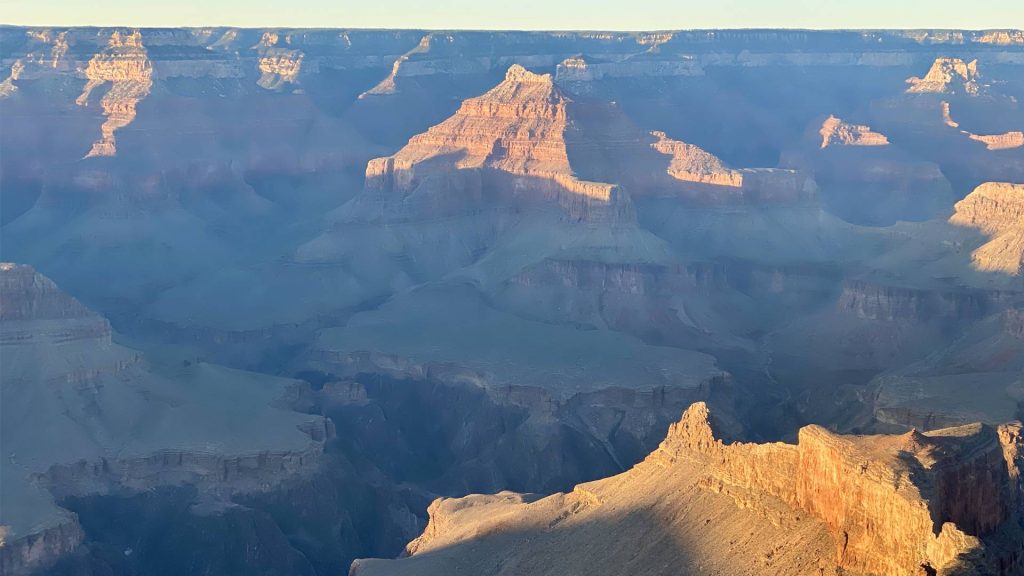
The Magic of Sunrise at the South Rim
When you think of the Grand Canyon, the image of a vast, colorful, rugged landscape likely comes to mind. The colors are vibrant and intricate, ranging from deep reds and oranges to soft purples and pinks. Sunrise at the Grand Canyon enhances these colors, making the landscape come alive in a way that is hard to describe. It’s a quiet, almost sacred time of day when nature seems to awaken slowly, unfolding like a beautiful painting as the sun rises above the horizon.
1. Arriving Before Dawn
To truly experience sunrise at the Grand Canyon, an early start is necessary. Arriving before dawn ensures that you will have the best possible view of the gradual transformation as the sun ascends from behind the canyon’s rim. Depending on the time of year, sunrise may occur as early as 5:00 AM or as late as 7:30 AM, so it’s important to check the time before heading out. This gives you a chance to find the perfect spot to watch the sunrise and, perhaps, even grab a cup of coffee to enjoy the peaceful atmosphere while waiting.
The South Rim offers several excellent viewpoints for catching the first light of the day. Some of the most popular spots include:
- • Mather Point: Located near the Grand Canyon Village, this is one of the most accessible and iconic viewpoints. It offers sweeping views of the canyon, allowing you to see vast stretches of the landscape as the light breaks over the canyon’s edges.
- • Yaki Point: For those looking to avoid crowds, Yaki Point is a quieter location that provides stunning views of the canyon’s expansive terrain, particularly looking toward the eastern side.
- • Hopi Point: Known for its panoramic views, Hopi Point is a fantastic location to catch the sunrise as the first light hits the canyon’s rock formations.
As you make your way to one of these viewpoints, you may notice the quiet hush of the world around you. The air is crisp, cool, and fresh, with the faint sounds of wildlife starting to stir. There’s a palpable sense of serenity in the pre-dawn hours, and the anticipation for what’s to come adds to the excitement.
2. The Dawn Chorus: Nature Awakens
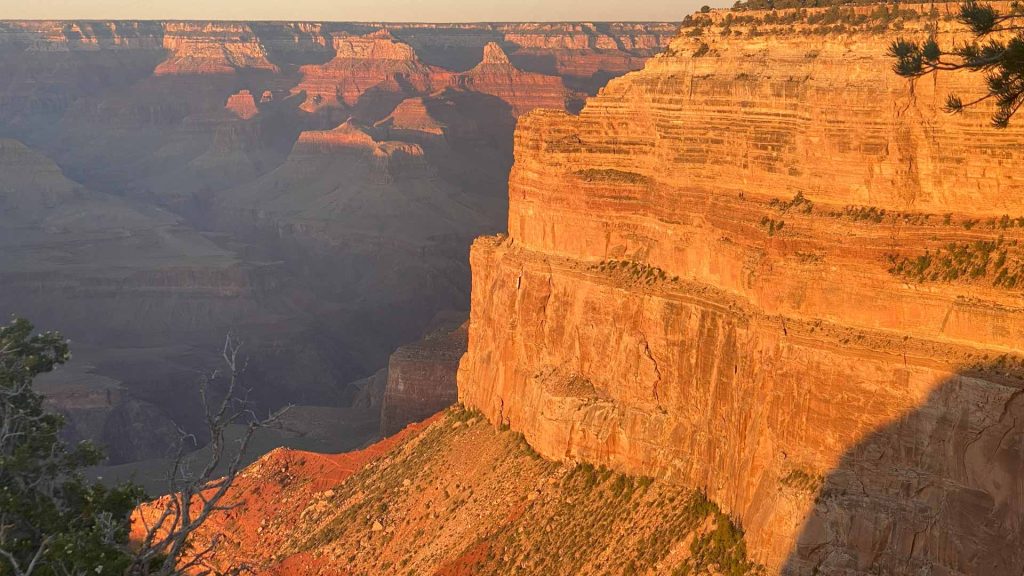
As the sun begins to rise, the first light casts long shadows across the canyon. The rich reds, purples, and golds of the canyon walls start to shift in hue, creating an ever-changing display of color. The early morning light illuminates the intricate layers of rock, highlighting the deep history of the canyon that spans millions of years.
During this time, you’ll notice the subtle shift in the atmosphere. Birds begin to call, and the stillness is occasionally broken by the rustle of wind through the trees or the distant chatter of squirrels. In this quietude, there’s a sense that the Grand Canyon is waking up, its vastness beginning to reveal itself in layers.
The grandeur of the landscape slowly comes into focus as the sun climbs higher in the sky. Shadows lengthen and colors intensify, giving you a fuller view of the canyon’s impressive rock formations. The sky, which starts off dark and mysterious, gradually lightens with shades of pink, lavender, and golden orange.
3. Photography Opportunities
If you’re a photographer or just love capturing beautiful moments, sunrise is the perfect time to take photos of the Grand Canyon. The early morning light is soft, creating rich, warm tones that enhance the already vibrant hues of the canyon’s rock formations. The changing light also adds depth and texture to your shots, as the play of light and shadow across the canyon walls brings out intricate details that are often lost in harsher midday sunlight.
For photographers, the key to capturing the best sunrise photos is timing. The golden hour, which occurs shortly after the sun rises, offers some of the most spectacular lighting conditions. Be sure to bring a wide-angle lens to capture the sweeping vistas, and consider using a tripod for long exposure shots to capture the motion of clouds or the stillness of the early morning light.
4. A Moment of Reflection and Connection
Watching the sunrise at the Grand Canyon isn’t just about the visual spectacle; it’s also an opportunity for personal reflection and connection with nature. There’s something deeply humbling about standing at the edge of such a massive geological formation and witnessing the majesty of the natural world. The vastness of the Grand Canyon puts things into perspective, reminding us of the Earth’s age and the power of natural forces.
As the sun rises higher and the light strengthens, you may find yourself taking a deep breath, appreciating the stillness and the beauty around you. It’s an ideal moment for mindfulness and introspection, as you experience a sense of oneness with the landscape.
The Beauty of Sunset at the South Rim
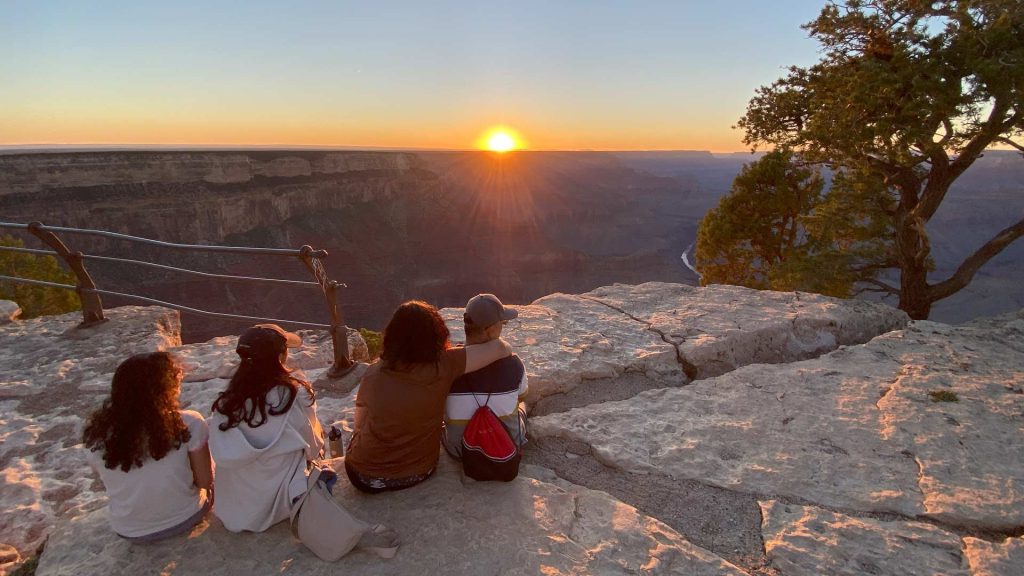
While sunrise at the Grand Canyon is a magical experience, sunset brings its own unique charm. As the sun begins its descent, the colors of the canyon change once again, creating an entirely different atmosphere. The light of the setting sun seems to soften the edges of the canyon’s cliffs and rock formations, casting a warm, golden glow across the landscape.
1. Choosing the Perfect Spot for Sunset
The South Rim offers a number of great viewpoints for sunset. Some locations are more crowded than others, especially in the late afternoon when the park starts to fill with visitors who have traveled to catch the evening spectacle. Here are some of the best spots for sunset:
- • Desert View Watchtower: Situated at the easternmost point of the South Rim, Desert View offers panoramic views of the canyon and is particularly beautiful during sunset. The watchtower itself adds an extra element of interest to your photos, and the location provides unobstructed views of the sunset as it casts long shadows across the canyon.
- • Hopi Point: A popular spot for both sunrise and sunset, Hopi Point offers a wide-angle view of the canyon and is known for its outstanding sunset views. The vantage point allows you to see the play of colors as the sun dips below the horizon, with the canyon walls changing hues from warm golds to deep reds and purples.
- • Pima Point: If you’re looking for a quieter spot to enjoy the sunset, Pima Point offers beautiful views of the canyon, especially in the late afternoon light.
2. The Light Show at Dusk
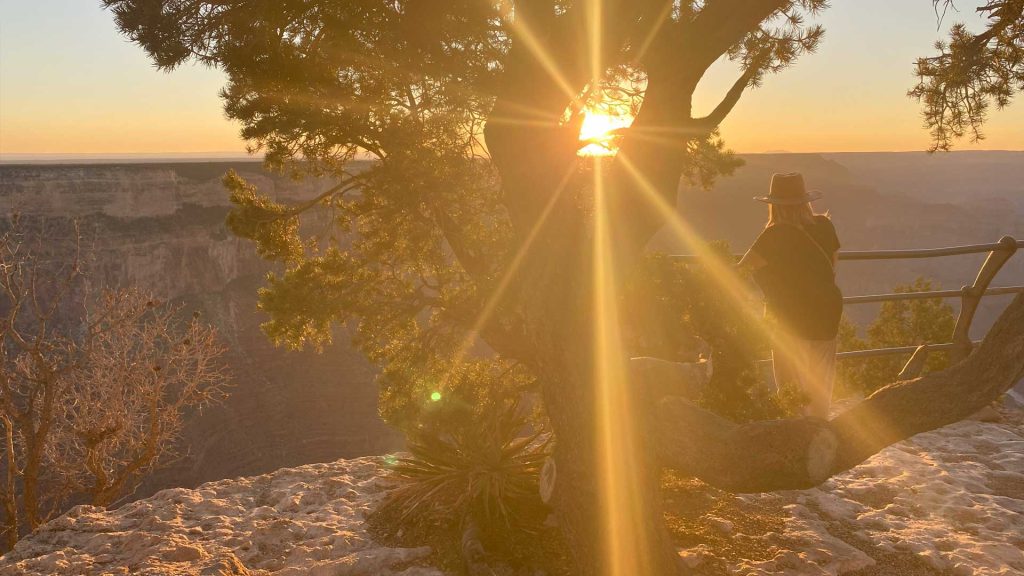
As the sun starts to set, the colors of the Grand Canyon come alive once again. The shadows lengthen, and the canyon walls are bathed in a soft, golden light. The warm colors of the canyon are at their most intense during this time, with the reddish-brown rock formations taking on a glowing, almost otherworldly quality.
The sky itself undergoes a dramatic transformation, shifting from a brilliant blue to hues of orange, pink, and purple. As the sun lowers, the sky deepens into shades of indigo, signaling the end of the day. This transition is one of nature’s most stunning displays of color, and the changing light across the canyon is a sight that leaves a lasting impression.
3. The Peaceful Atmosphere
Sunset at the Grand Canyon brings a different kind of energy than sunrise. While sunrise is often quiet and contemplative, sunset is a time for reflection and appreciation as the day winds down. As the light fades and the cool air begins to settle in, there’s a calm, peaceful energy that surrounds the canyon. Visitors often find themselves quietly watching the last moments of daylight, fully immersed in the beauty of the landscape.
4. Nightfall at the Canyon
After the sun sets, the Grand Canyon’s landscape takes on a new life under the stars. If you’re staying overnight at the South Rim, you may want to explore the night sky after sunset. The Grand Canyon, as part of the Grand Canyon Dark Sky Initiative, is one of the best places in the country for stargazing. The lack of light pollution allows the stars to shine brightly, creating a magical experience for those who choose to stay a little longer and gaze up at the night sky.
Tips for Watching Sunrise and Sunset at the Grand Canyon
- Arrive Early for Sunrise: If you’re planning to catch the sunrise, make sure to arrive at your chosen viewpoint well before the sun rises. This will give you time to find a good spot and fully enjoy the experience.
- Dress in Layers: The temperatures at the Grand Canyon can vary dramatically, especially in the morning and evening. Even in the summer, it can be chilly at sunrise, so be prepared with layers of clothing.
- Stay Hydrated: The desert environment can quickly dehydrate you, so make sure to bring water with you, especially if you
Which is better, sunrise or sunset?
They are both amazing. Different light angles makes each one different and spectacular. There are less people in the morning, so that might be a factor. And the skies might be clearer in the morning, although that depends on the day and weather of course. There is a peaceful feeling of closing the day with a sunset that is like no other. Maybe try both?
Can we use park shuttles to these locations?
Yes. Shuttles generally open for boarding about an hour before the sunrise and run until one hour after sunset. This schedule is subject to change. Make sure to follow this NPS link for the most up-to-date shuttle information. Yaki Point requires boarding the (orange route) Kaibab Shuttle. A shuttle will also be available for Hermit Road (red route) stops.
What should we bring?
It can be chilly, even in summer months. Check the weather forecast. You probably should have a coat, and maybe hat and gloves during much of the year.
Sunset. Sunrise. Get ready for the magic! You will never forget your incredible experience and this scenic wonder.





 by
by

Add a comment