
Grand Canyon National Park, one of the most iconic natural wonders of the world, is renowned not only for its awe-inspiring landscapes but also for the rich diversity of wildlife that calls this rugged, geologically significant region home. From majestic elk and deer to curious squirrels and a wide variety of bird species, the park offers visitors numerous opportunities to witness animals in their natural habitats. Whether you’re standing at Mather Point, peering over the edge of the Grand Canyon, or strolling through the area surrounding Bright Angel Lodge, the wildlife you encounter is an essential part of the park’s ecosystem.
This article will explore the fascinating animals you might encounter within Grand Canyon National Park, the best areas for observing them, including Mather Point and Bright Angel Lodge, and tips for photographing these creatures responsibly. We’ll also discuss the critical issue of feeding wildlife and why it’s essential to keep our distance.
Grand Canyon’s Wildlife: A Brief Overview
Grand Canyon National Park, located in northern Arizona, spans over 1.2 million acres and encompasses a variety of ecosystems, ranging from desert landscapes to forested plateaus. This variation in terrain supports a vast array of wildlife. With elevations ranging from around 2,000 feet at the Colorado River to over 7,000 feet on the North Rim, the park is home to over 400 species of animals, including mammals, birds, reptiles, and insects.
Some of the more notable mammals that visitors can spot in the Grand Canyon include:
- • Elk
- • Mule Deer
- • Mountain Lions
- • Bighorn Sheep
- • Moose (though rare, they may be seen occasionally)
- • Coyotes
- • Squirrels (especially Rock Squirrels)
Additionally, Grand Canyon National Park is a paradise for birdwatchers, with more than 400 species of birds, including the endangered California Condor, peregrine falcons, and a variety of songbirds.
While it’s possible to see animals throughout the park, certain areas offer better opportunities for sightings, especially near developed locations like Mather Point and Bright Angel Lodge. These areas have easy access for visitors and often provide prime wildlife observation points, as animals are attracted to the water sources and food opportunities found around human settlements.
Wildlife at Mather Point: Deer, Squirrels, and More
Mather Point, located on the South Rim of the Grand Canyon, is one of the park’s most popular viewpoints. Visitors flock here to witness the panoramic views of the canyon, where the Colorado River weaves through the landscape. But beyond the breathtaking vistas, Mather Point also offers an excellent location for spotting wildlife.
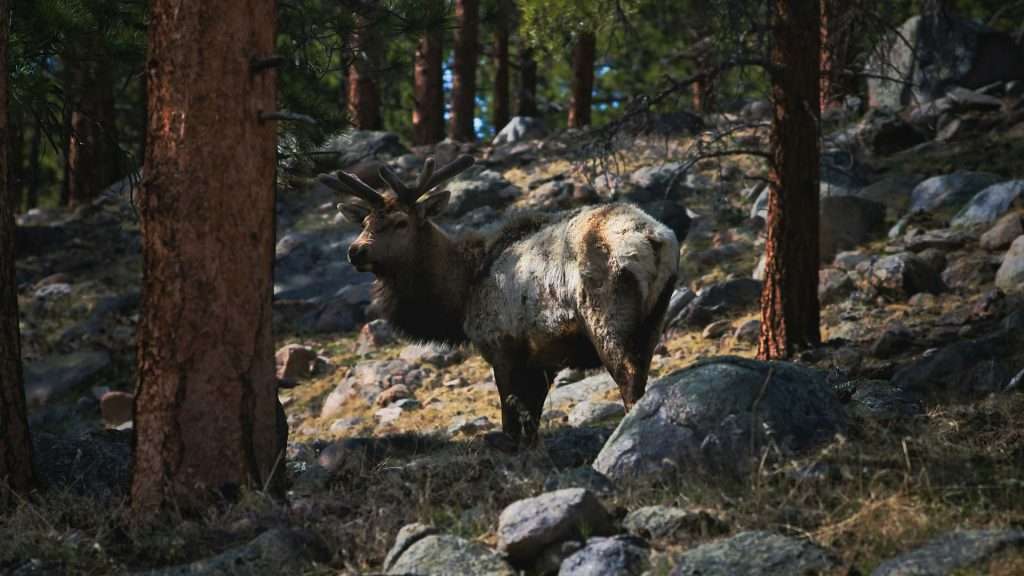
Mule Deer
One of the most commonly seen mammals around Mather Point is the mule deer. These graceful creatures are often spotted grazing on the grasslands surrounding the viewpoint. Mule deer are named for their large, “mule-like” ears, and they are commonly found in forested and open areas of the park. They are especially active during the early morning or late evening hours, making these times ideal for wildlife watchers. Although these animals may seem tame, visitors should maintain a safe distance and avoid disturbing them.
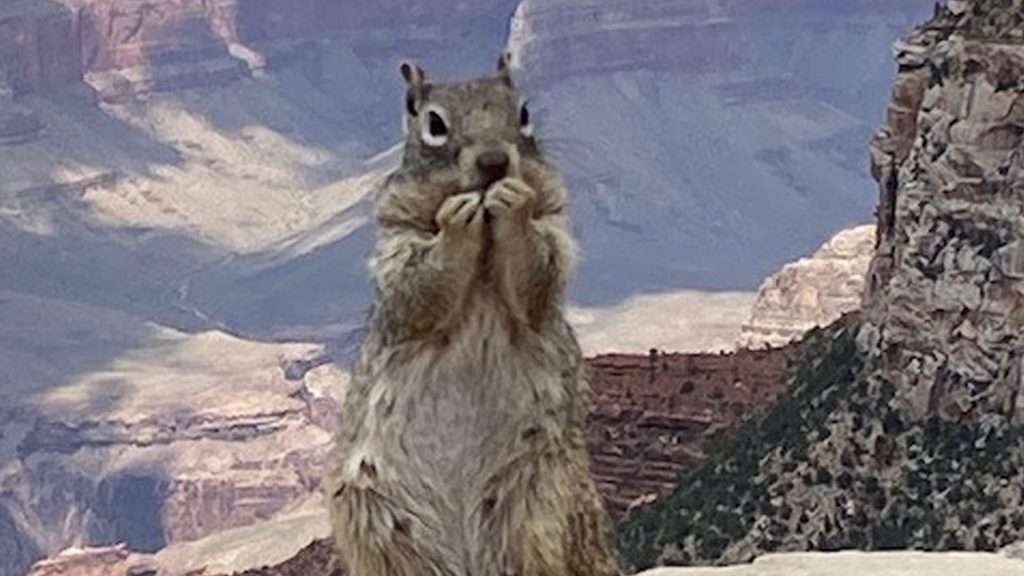
Rock Squirrels
Another animal that visitors frequently encounter at Mather Point is the rock squirrel. These large, furry rodents are easily recognizable by their grizzled gray fur and bushy tails. Rock squirrels are quite accustomed to human presence and are often seen scavenging near picnic areas or sunning themselves on the rocks. However, while they may seem friendly, it is essential to remember that feeding them is harmful to their health and to the park’s ecosystem.
Rock squirrels are opportunistic feeders, and they may approach visitors in search of food. But feeding them encourages them to lose their natural foraging habits, leading to health problems and dependence on human food sources. In addition, squirrels can become aggressive if they associate humans with food.
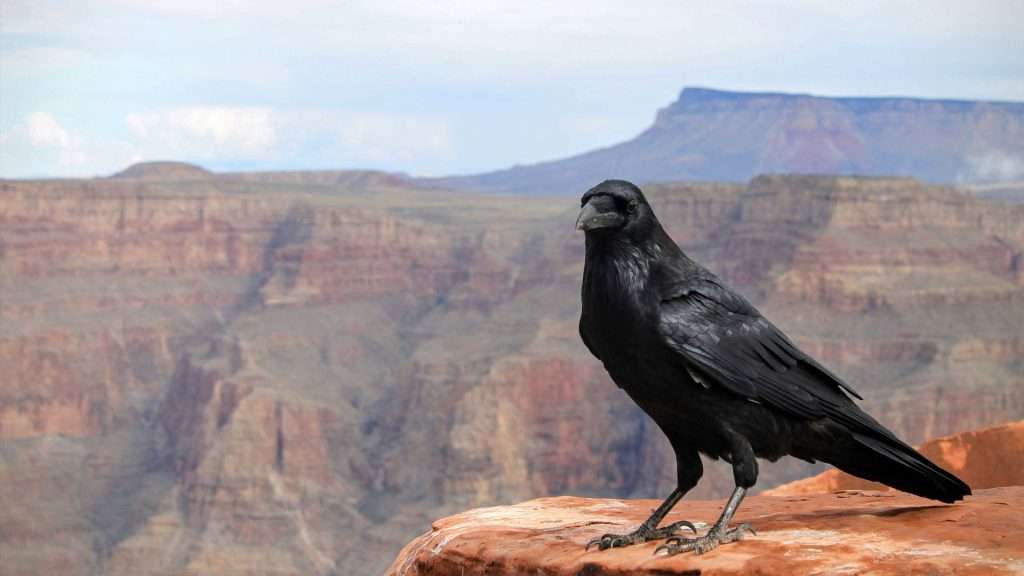
Birds of Mather Point
Birdwatchers will delight in the abundance of bird species around Mather Point. The Grand Canyon is home to several species of raptors, including the Peregrine Falcon, Red-tailed Hawks, and Turkey Vultures. Visitors may spot these birds soaring high above the canyon, riding thermal updrafts in search of prey. During migration seasons, you might also see an array of songbirds such as the Mountain Bluebird, Western Bluebird, and Lazuli Bunting.
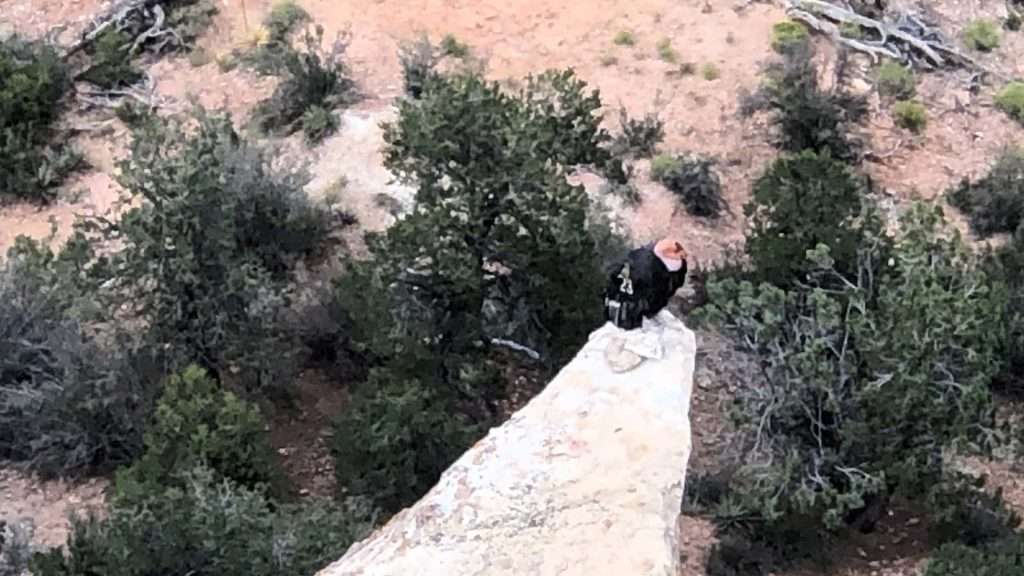
The park is also home to the iconic California Condor, a critically endangered species that has been reintroduced to the region. With a wingspan of up to 9.5 feet, these magnificent birds are a rare but exhilarating sight.
Wildlife at Bright Angel Lodge: Elk and More
Bright Angel Lodge, located at the Grand Canyon Village on the South Rim, is another prime location for wildlife viewing. This historic lodge offers stunning views of the canyon and provides easy access to several trailheads. The surrounding areas are often visited by elk, mule deer, and a variety of bird species, making it an excellent spot for both casual wildlife watching and photography.
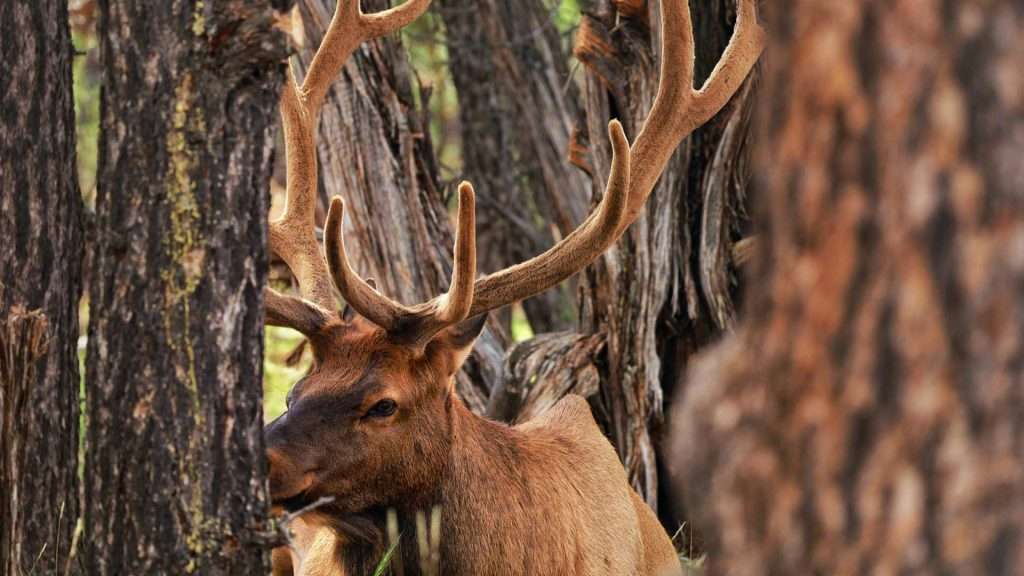
Elk
The Rocky Mountain elk is one of the most iconic animals in the Grand Canyon. These large, majestic creatures are often seen around Bright Angel Lodge, especially during the early mornings and late evenings when they come down from the higher elevations to feed. The males, or bulls, are particularly impressive during the fall rutting season when they engage in dramatic bugling and display their impressive antlers.
Elk are generally peaceful creatures, but bulls can become aggressive during the breeding season, so visitors should always observe them from a safe distance. During the fall, elk are especially abundant around Bright Angel, as the park’s higher elevations become colder, and the animals migrate to the lower areas for the winter.
Mule Deer and More
Similar to Mather Point, Bright Angel Lodge also offers opportunities to spot mule deer. These deer are frequently seen grazing near the lodge or wandering the nearby meadows. They tend to be more active at dawn and dusk, so early risers and late wanderers may have the best chance of encountering them.
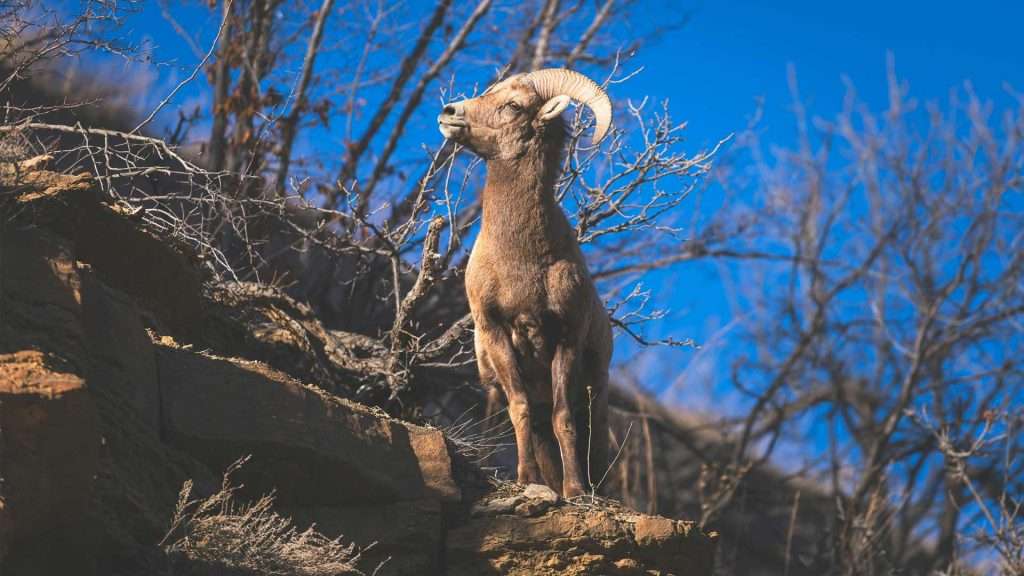
In addition to mule deer and elk, the area around Bright Angel Lodge is home to coyotes, mountain lions (though sightings are rare), and bighorn sheep. While mountain lions are secretive and elusive, they are occasionally seen in the remote areas of the canyon, particularly during the quieter months.
Photographing Wildlife in the Grand Canyon
One of the most rewarding experiences at Grand Canyon National Park is capturing the beauty of its wildlife through photography. Whether you’re using a smartphone or a professional camera, photographing animals can be an exciting challenge. Here are some tips for responsible wildlife photography:
- 1. Respect Animal Space: It’s essential to keep a safe distance between you and the animals. Use a zoom lens to capture close-up shots without disturbing the animals. Approaching wildlife too closely can cause stress or even aggressive behavior.
- 2. Patience is Key: Wildlife photography often requires waiting for the right moment. Animals are unpredictable, and patience will increase your chances of capturing natural, undisturbed moments.
- 3. Avoid Flash: Flash photography can startle animals and disrupt their behavior. Natural lighting works best, especially in the early morning or late evening when the light is soft and warm.
- 4. Stay Quiet: Loud noises can scare animals away. Move slowly, speak in whispers, and avoid sudden movements to avoid startling the wildlife.
- 5. Avoid Feeding Wildlife for Photos: It may be tempting to use food to attract animals for a perfect photo, but this is not only unethical but also harmful to the animals. Feeding wildlife alters their behavior, makes them dependent on human food, and can disrupt the delicate ecosystem.
The Importance of Not Feeding Wildlife
While it may seem harmless to feed the animals that roam the Grand Canyon, it’s crucial to understand why this practice is dangerous. Feeding wildlife—whether it’s rock squirrels, deer, or elk—can lead to numerous problems:
- 1. Health Risks for Animals: Human food is not suitable for wildlife. Animals that are fed by humans can suffer from malnutrition or digestive problems because their bodies are not adapted to process such food.
- 2. Behavioral Changes: Animals that are fed by humans may lose their fear of people, becoming more aggressive or approaching visitors in search of food. This can increase the risk of injury to both animals and people.
- 3. Ecosystem Disruption: Feeding wildlife interferes with the natural food chain. When animals become reliant on human-provided food, it can alter the balance of the ecosystem and lead to population imbalances.
- 4. Legal Implications: Feeding wildlife in national parks is illegal in many places, including Grand Canyon National Park. This rule exists to protect the well-being of animals and the integrity of the natural environment.
Conclusion
Grand Canyon National Park is not only a geological wonder but also a sanctuary for a diverse array of wildlife. Whether you’re at Mather Point or Bright Angel Lodge, the park offers ample opportunities to observe deer, elk, squirrels, and a variety of birds. For photographers, the Grand Canyon provides the chance to capture these creatures in their natural habitats. However, it’s essential to remember that respecting wildlife and refraining from feeding animals is vital to maintaining the delicate balance of the park’s ecosystem. By following these guidelines, visitors can enjoy the beauty of the park’s wildlife while helping to protect it for future generations.





 by
by

Add a comment